Dimensions (Width × Height, unit: mm):
(1) Height 50 Series: 100×50, 150×50, 200×50, 300×50, 400×50
(2) Height 100 Series: 100×100, 150×100, 200×100, 300×100, 400×100, 500×100, 600×100, 800×100
(3) Height 150 Series: 200×150, 300×150, 400×150, 500×150, 600×150, 800×150, 1000×150
(4) Height 200 Series: 300×200, 400×200, 500×200, 600×200, 800×200, 1000×200, 1200×200
(5) Extra‑long Span / Special Widened Cable Tray for Power Plants: 1000×100, 1000×150, 1000×200, 1200×200
Plate Thickness (unit: mm): 1.0/1.2/1.5/2.0/2.5/3.0/3.5
Ⅰ. Product Definition:
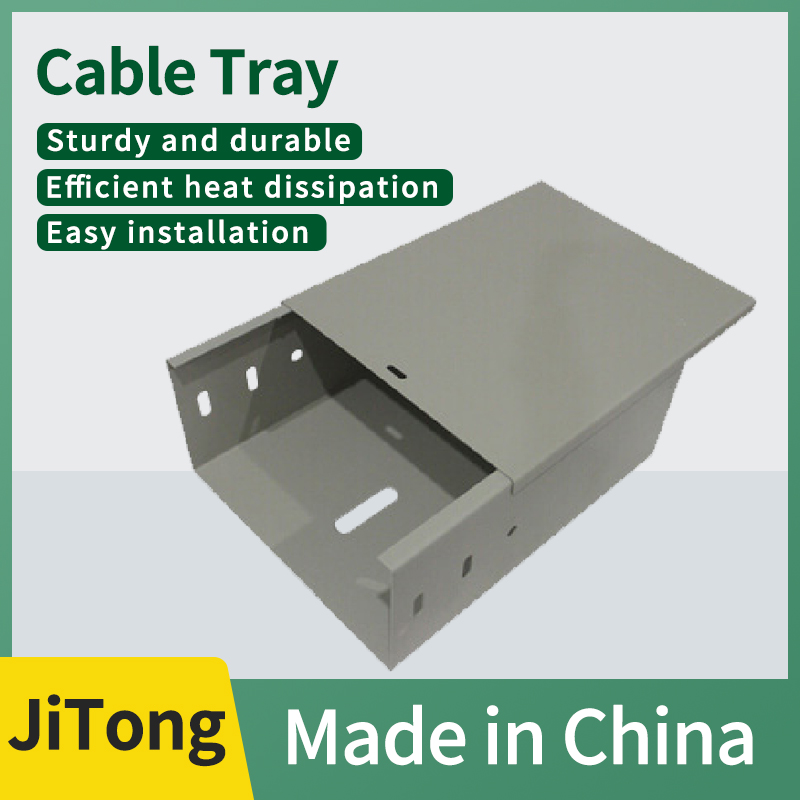
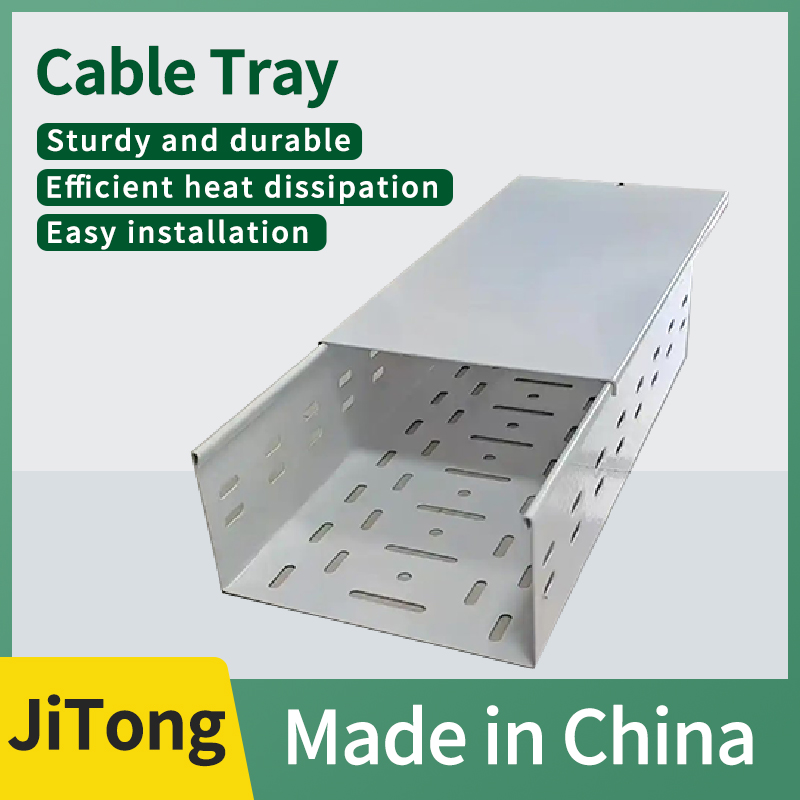
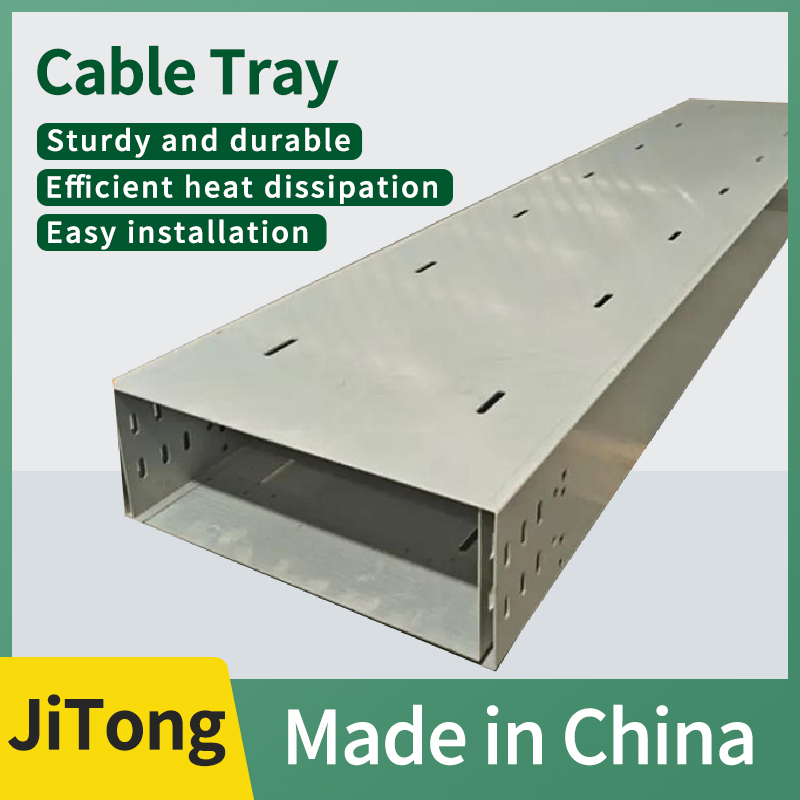
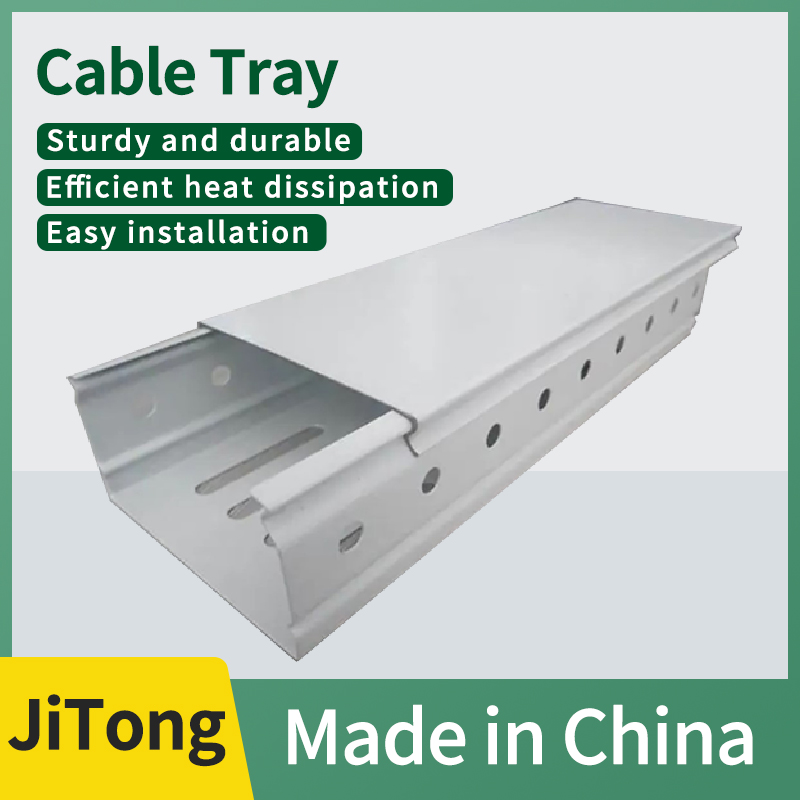
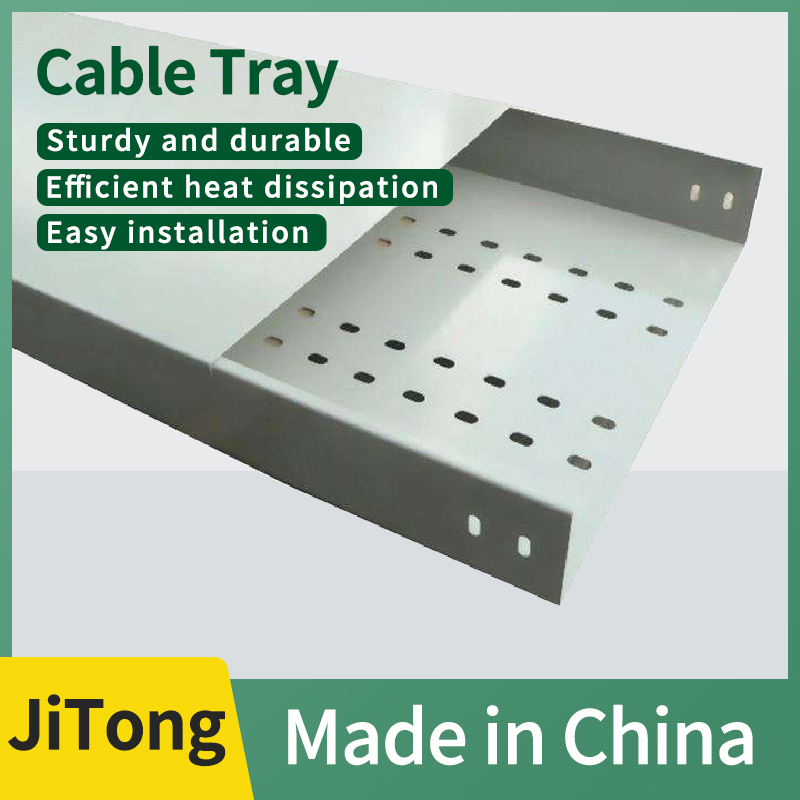
The fire-resistant tray-type cable tray is made of Q235 cold-rolled steel plates that are integrally bent and formed. The base plate is stamped with evenly distributed heat dissipation holes, and both sides feature heightened continuous upstanding edges, making it a semi-transparent composite tray. The entire structure is first hot-dip galvanized/electroplated for corrosion protection, and then sprayed with an expansive fire-resistant coating over the entire length. It comes with matching fire-resistant covers and a full set of fire-resistant accessories, combining three major characteristics: heat dissipation and ventilation, full support for cables, and fire resistance and flame retardancy. It is a universal tray for mixed strong and weak electrical installations in scenarios with fire-resistant requirements.
II. Two Major Mainstream Production Processes
1. Conventional Coating Type (Commonly Used on the Market) (1) Tray Forming: Steel plates are CNC bent, and ventilation and heat dissipation holes are punched on the bottom plate (with a hole opening rate of 28% to 35%); the bottom can be pressed with longitudinal reinforcing ribs to enhance load-bearing capacity; (2) Base Anti-corrosion: Overall hot-dip galvanizing treatment, with a zinc layer thickness of ≥65μm, to prevent substrate corrosion; (3) Fire-resistant Spray Coating: Multi-layer spraying of intumescent fire-resistant coatings on the inner and outer walls, followed by high-temperature drying and curing; F60 fire-resistant dry film thickness is ≥0.8mm; F90/F120 fire-resistant dry film thickness is ≥1.2~1.5mm; (4) Fire-resistant Mechanism: When the ambient temperature reaches 200~300℃, the fire-resistant coating rapidly expands by 5~10 times, forming a honeycomb-like dense carbonized thermal insulation layer, which isolates high temperatures and blocks heat conduction, ensuring that the internal cables remain powered for the specified fire-resistant duration.
2. Double-layer composite high-fire-resistant type (specifically designed for tunnels and shafts) features a double-layer steel plate structure for its side panels, with the interlayer filled with aluminum silicate refractory insulation cotton. This design significantly enhances its thermal insulation performance, achieving a stable fire resistance limit of 90~120 minutes. It is suitable for high-fire-resistant projects such as enclosed pipeline corridors and cable shafts in high-rise buildings.
III. Complete set of supporting fire protection accessories:
1. Straight-through accessories: thickened fireproof connecting pieces, fireproof galvanized bolts, grounding braided jumper wires; 2. Special-shaped turning pieces: 90° horizontal bends, 45° horizontal bends, vertical up/down bends, tees, crosses, reducers; 3. Functional accessories: detachable fireproof cover plates, metal partition plates, fireproof partition boards; 4. Support system: fireproof support arms, fireproof columns, seismic support and hangers (mandatory for shafts and tunnels).
Fourth, the core five advantages: 1. Balanced heat dissipation and protection, with the strongest universality. The bottom plate is punched to form a convection ventilation, which provides a far superior heat dissipation effect compared to enclosed fireproof trough-type trays, reducing cable temperature rise by 8~12℃. The entire bottom plate fully supports all cables, preventing thin wires and optical fibers from sagging and getting stuck. Its protective performance is superior to hollow fireproof ladder-type trays, making it the preferred choice for mixed wiring of strong and weak electricity.
2. Formal fire-resistant and flame-retardant, meeting fire safety inspection requirements with a complete expanded fireproof and thermal insulation layer. The bridge structure does not soften or collapse in a fire environment, ensuring continuous power supply to all types of cables such as fire pumps, smoke exhaust fans, emergency lighting, and fire alarms. A third-party fire safety type testing report can be provided.
3. With excellent load-bearing performance, the integrated complete base plate suitable for dense cable laying evenly distributes loads. Coupled with reinforced ribs at the bottom, the uniformly distributed load can reach over 400kg/m. It can simultaneously support thick high-voltage power cables and thin control signal cables, making it suitable for high-capacity multi-circuit wiring.
4. With dual protection against corrosion and fire, it is suitable for indoor and outdoor humid environments. The bottom layer is hot-dip galvanized for long-term rust prevention, and the outer layer is coated with a fire-resistant material that is resistant to water, oil, and mild acids and alkalis. Basements, wastewater treatment plants, and lightly corrosive workshops do not require additional anti-corrosion treatment.
5. The wiring maintenance is convenient, and the construction is flexible with a semi-open structure. It is possible to inspect and add or remove cables without completely dismantling the cover plate. The bottom plate is reserved with binding holes, and the cables are neatly fixed. By adding metal dividers, it is possible to achieve separate laying of strong and weak electricity without the need for two separate trays.
Ⅳ. Applicable Scenarios:
Factory buildings, commercial complexes, hospitals, airports, strong and weak electricity hybrid fire protection trunk lines (with simultaneous laying of power cables, instruments, fire alarm lines, and optical fibers); underground garages, distribution rooms, new energy factory buildings, photovoltaic plant areas, where cables generate moderate heat and have rigid fire prevention and fire resistance requirements; mildly corrosive workshops, sewage treatment plant distribution corridors (dual protection of hot-dip galvanized substrate + fireproof coating); data centers, central control room area wiring, considering both heat dissipation and basic shielding; tunnels, integrated utility tunnels, high-rise basement zoned wiring (with supporting fireproof covers).
Ⅴ. Key Points of Construction and Installation Specifications
1. All on-site cutting, grinding, and drilling sections should be immediately coated with fire-resistant patching compound to fully restore the fire-resistant and heat-insulating layer;
2. Support arms, columns, and connecting bolts should all be equipped with fire-resistant galvanized components, and the mixed use of ordinary non-fire-resistant accessories is prohibited;
3. Each section of cable tray should be installed with grounding braided jumper wires, and repeated grounding should be added to shafts, tunnels, and long-distance main lines to ensure continuous equipotential conduction;
4. When laying strong and weak electrical cables on the same tray, metal dividers must be installed for complete isolation; dust, pipe racks, and shafts should be covered with fire-resistant covers throughout the entire process;
5. In areas with cables wider than 600mm and dense heavy-load cables, support arm support points should be densified to control deflection and deformation under long-term load;
6. For high-rise shafts, tunnels, and fire-fighting main lines, seismic support hangers should be provided according to specifications;
7. Special fire-resistant sealing materials should be used for cable tray holes through walls and floor slabs to block the longitudinal spread of flames and smoke along the cable tray.




.jpg.webp)


