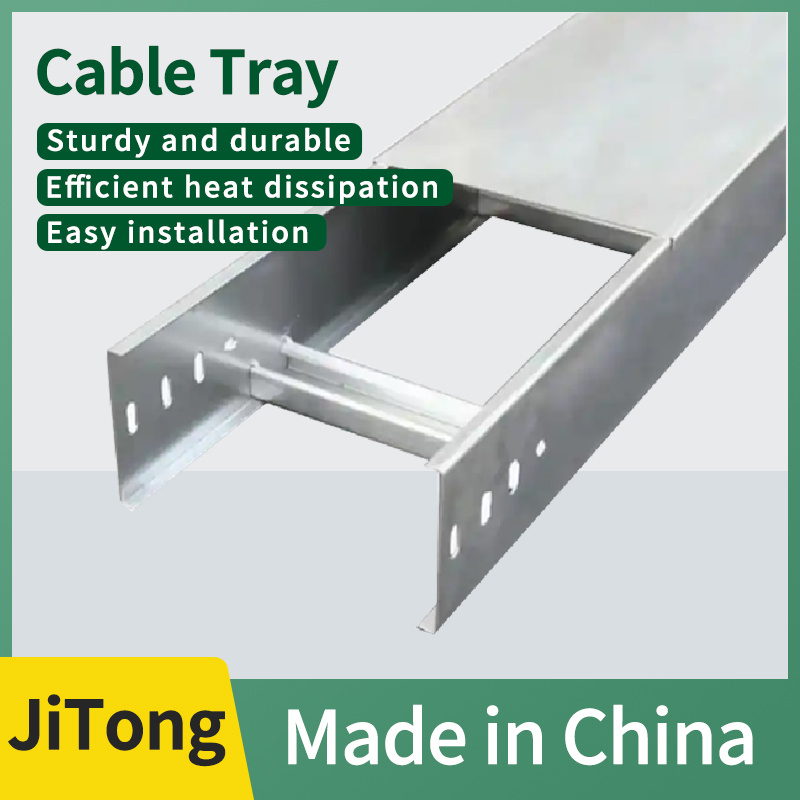
Dimensions (Width × Height, unit: mm):
(1) Height 50 Series: 100×50, 150×50, 200×50, 300×50, 400×50
(2) Height 100 Series: 100×100, 150×100, 200×100, 300×100, 400×100, 500×100, 600×100, 800×100
(3) Height 150 Series: 200×150, 300×150, 400×150, 500×150, 600×150, 800×150, 1000×150
(4) Height 200 Series: 300×200, 400×200, 500×200, 600×200, 800×200, 1000×200, 1200×200
(5) Extra‑long Span / Special Widened Cable Tray for Power Plants: 1000×100, 1000×150, 1000×200, 1200×200
Plate Thickness (unit: mm): 1.0/1.2/1.5/2.0/2.5/3.0/3.5
Ⅰ. Product Definition:
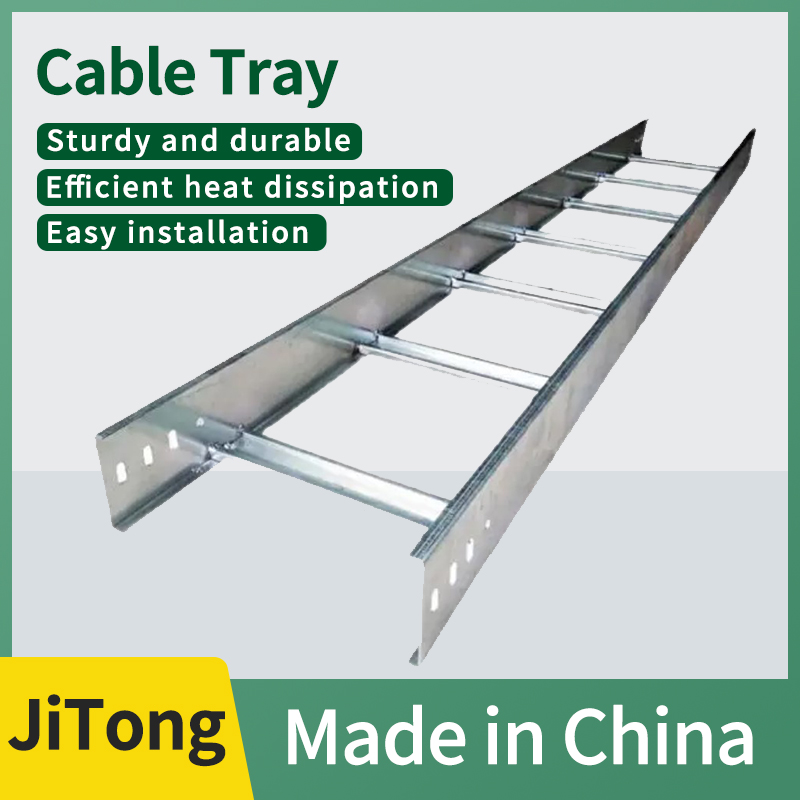
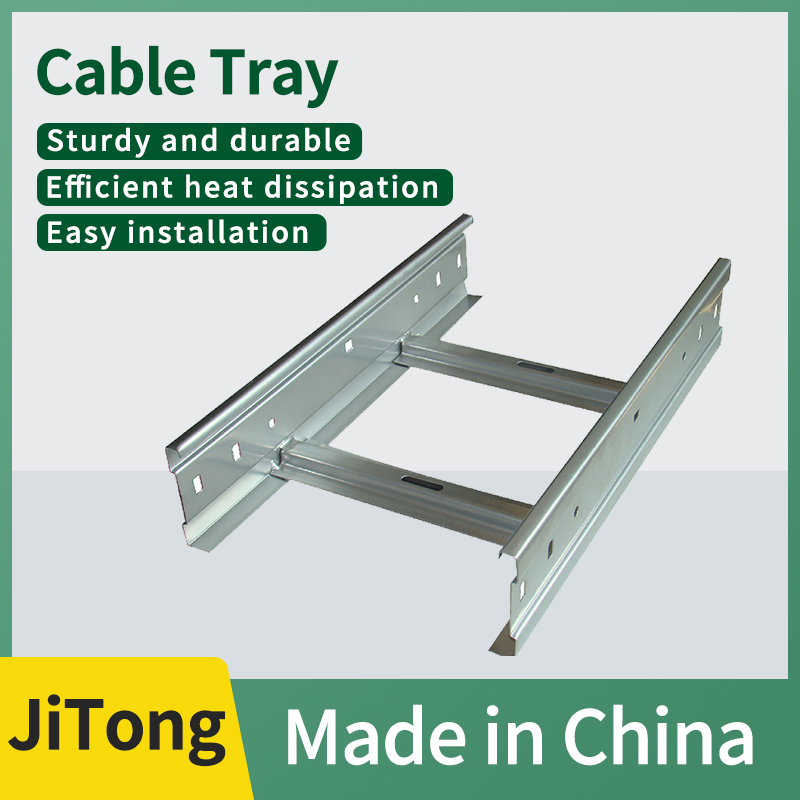
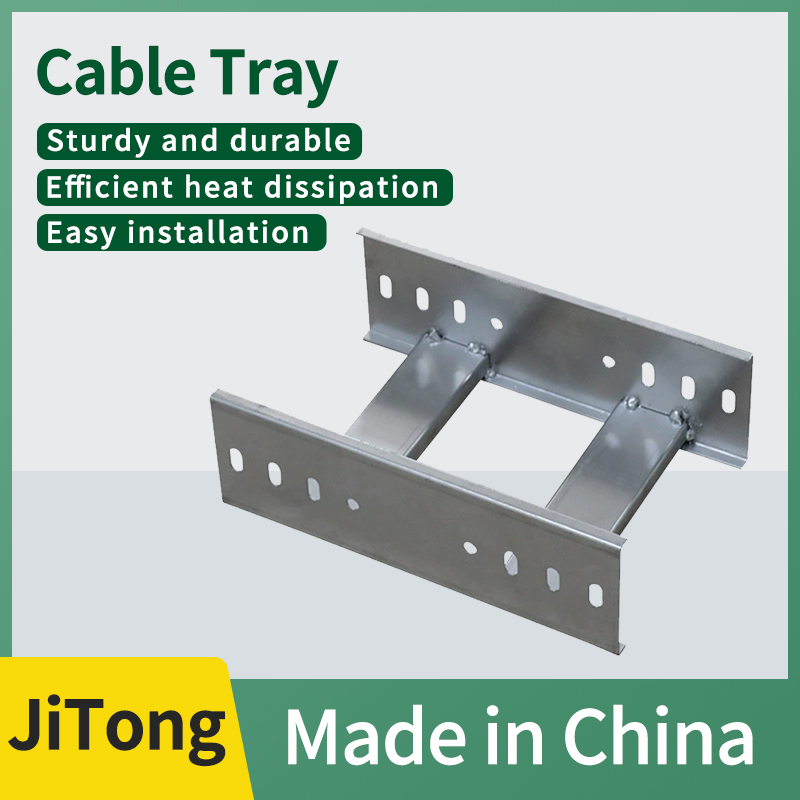
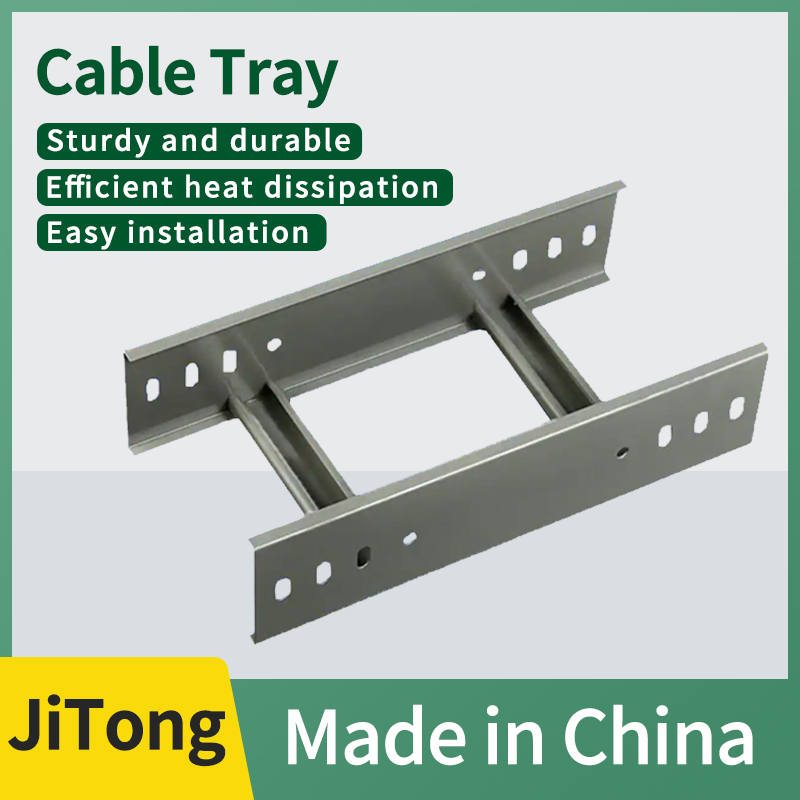
Hot-dip galvanized ladder cable tray, with base material made of Q235 carbon steel plate, consisting of an open-hole ladder structure formed by double-sided bending and high-strength longitudinal beams + transverse welding rungs; after all trays, bends, and accessories are processed and molded, they are immersed in high-temperature molten zinc for hot-dip galvanizing corrosion protection. It is a mainstream tray for high-current power cables and heavy-duty outdoor wiring, combining strong heat dissipation with long-term heavy-duty corrosion protection.
II. Production and Hot-Dip Galvanizing Anti-Corrosion Process
1. Ladder Frame Forming Process: Steel plate cutting → double-layer edge rolling reinforcement of side plates → prefabrication of connection and lifting holes → punching and forming of ladder rungs, fully welded and fixed on both sides of the longitudinal beams; standard ladder rung spacing: 150/200/300mm, heavy-duty models with denser 150mm rung spacing to enhance load-bearing capacity; plate thickness: conventional 1.5/2.0/2.5/3.0mm, for widths over 600mm, it is recommended to use ≥2.5mm thickened steel plates; standard single-section length: 2000mm, large-span ladder frames can be customized with 6000mm long single sections.
2. Hot-dip galvanizing core anti-corrosion process: Cutting and forming → Degreasing and degreasing → Hydrochloric acid pickling and rust removal → Plating activation aid → Soaking in a 450~480℃ zinc bath for 3~5min → Centrifugal zinc removal → Water cooling and passivation, inspection, and storage. Coating layer structure: steel substrate + zinc-iron alloy layer + pure zinc surface layer, metallurgically bonded, making it resistant to peeling and falling off due to impact or cutting. National standard for zinc coating: thin plates ≤5mm, average zinc coating thickness ≥65μm; thick plates >5mm, ≥86μm, zinc coating adhesion ≥610g/㎡. Self-healing anti-corrosion: sacrificial anode protection, zinc preferentially corrodes at damaged areas of the zinc coating, automatically protecting the steel. Neutral salt spray test for over 3000 hours. Appearance: silver gray matte finish, with natural zinc pattern on the surface, distinguishing it from the bright mirror effect of electroplated zinc.
III. The entire set of supporting hot-dip galvanized accessories undergoes synchronous and comprehensive hot-dip galvanizing to prevent dissimilar metal corrosion:
straight-through accessories include thickened connecting pieces, high-strength galvanized bolts, and grounding jumper wires; special-shaped turning pieces include 90° horizontal bends, 45° horizontal bends, vertical up/down bends, tees, crosses, and reducers; functional accessories include supporting galvanized cover plates, metal divider plates, and fireproof dividers; support systems include thickened hot-dip galvanized support arms, columns, and seismic support and hangers.
IV. Core Five Advantages
1. Open-type hollow design, optimal heat dissipation performance No enclosed bottom plate, allowing for all-round air convection and sufficient cable heat dissipation channels. Compared to slot-type trays, it can reduce cable temperature rise by 10~15℃, effectively avoiding heat accumulation and aging of high-current and high-voltage cables. It is suitable for laying dense high-power cables.
2. Lightweight and high-strength hollow structure with 30% less material than the same specification trough-type cable tray, saving effort in lifting and transportation; double-layer crimped longitudinal beams + fully welded ladder rungs provide stable mechanical structure, with a reinforced heavy-duty uniform load capacity of up to 500kg/m, capable of supporting multiple thick and heavy high-voltage cables.
3. Heavy-duty corrosion protection, suitable for harsh indoor and outdoor environments. Thick zinc coating resistant to rainwater, high salt spray, mild acids and alkalis, and high humidity. Can be used for long-term applications in coastal docks, offshore wind power, chemical industries, sewage plants, and open-air pipe corridors. Normal service life of 15 to 25 years, with almost no maintenance required in the later stages.
4. Wiring maintenance is convenient, with visual management without cover plate obstruction. Laying, adding or removing cables, and fault inspection do not require dismantling components. The cables are visually visible, significantly reducing maintenance and expansion work hours in the later stages.
5. With the same level of corrosion resistance, the comprehensive procurement cost is more economical due to the lower material usage, and the unit price is lower than that of hot-dip galvanized trough-type and tray-type cable trays of the same specification.
V. Applicable Scenarios
1. Power plants, substations, metallurgy, and boiler rooms: centralized laying of a large number of 10kV high-voltage, large-section power cables;
2. Chemical parks, oil refineries, wastewater treatment plants, and coastal factories: outdoor/workshop environments with high salt spray and mild corrosion;
3. Urban utility tunnels, tunnels, outdoor overhead plant structures, and main cables in photovoltaic/wind power plant areas;
4. Large steel structure factories and long-distance wiring across equipment: open spaces requiring significant heat dissipation and heavy-duty support;
5. Industrial projects primarily involving power cables and frequent inspection of lines in the later stages.
VI. Key Points of Construction and Installation Specifications
1. After on-site cutting and grinding, the metal sections should be immediately coated with zinc-rich repair paint to seal the exposed steel and prevent corrosion;
2. Support arms, columns, and connecting bolts should all be equipped with hot-dip galvanized parts. It is prohibited to mix ordinary electroplated galvanized fittings to avoid electrochemical corrosion;
3. Each section of the entire cable tray should be equipped with grounding jumper wires to ensure continuous equipotential conduction. Substations and chemical projects should be provided with additional multiple grounding;
4. When laying strong and weak electrical cables in the same ladder, metal separation plates must be installed for complete isolation. Galvanized cover plates should be added throughout the process in open and dusty environments;
5. For wide cable trays with a width of over 600mm and heavy-duty installations, support arm support points should be densified to control deflection and deformation under long-term load;
6. For six-meter large-span ladder frames and high-voltage cable trunks, seismic support hangers should be provided according to fire electrical specifications.