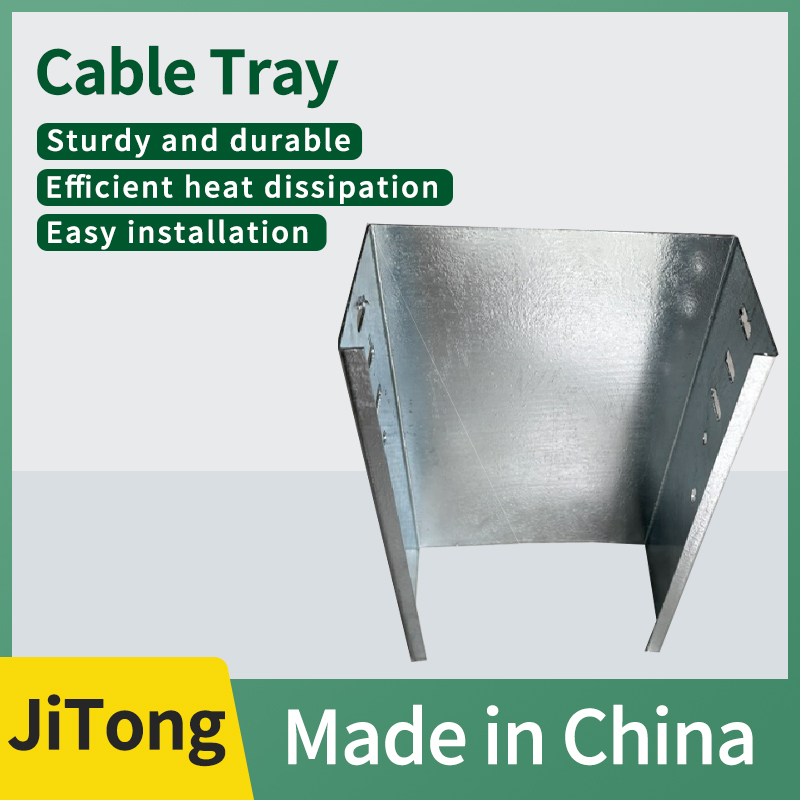
Dimensions (Width × Height, unit: mm):
(1) Height 50 Series: 100×50, 150×50, 200×50, 300×50, 400×50
(2) Height 100 Series: 100×100, 150×100, 200×100, 300×100, 400×100, 500×100, 600×100, 800×100
(3) Height 150 Series: 200×150, 300×150, 400×150, 500×150, 600×150, 800×150, 1000×150
(4) Height 200 Series: 300×200, 400×200, 500×200, 600×200, 800×200, 1000×200, 1200×200
(5) Extra‑long Span / Special Widened Cable Tray for Power Plants: 1000×100, 1000×150, 1000×200, 1200×200
Plate Thickness (unit: mm): 1.0/1.2/1.5/2.0/2.5/3.0/3.5
Ⅰ. Product Definition:
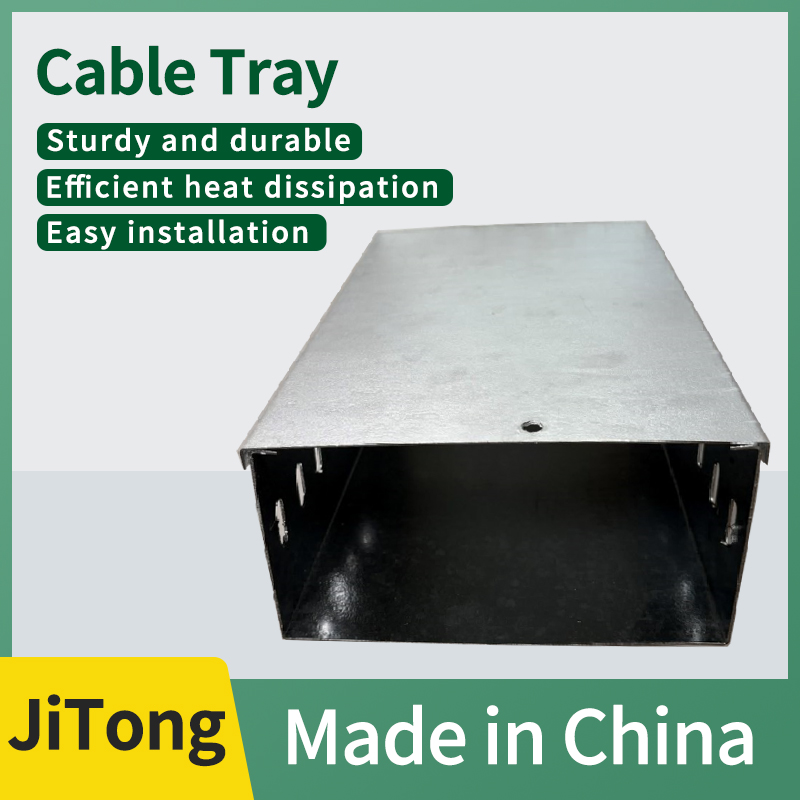
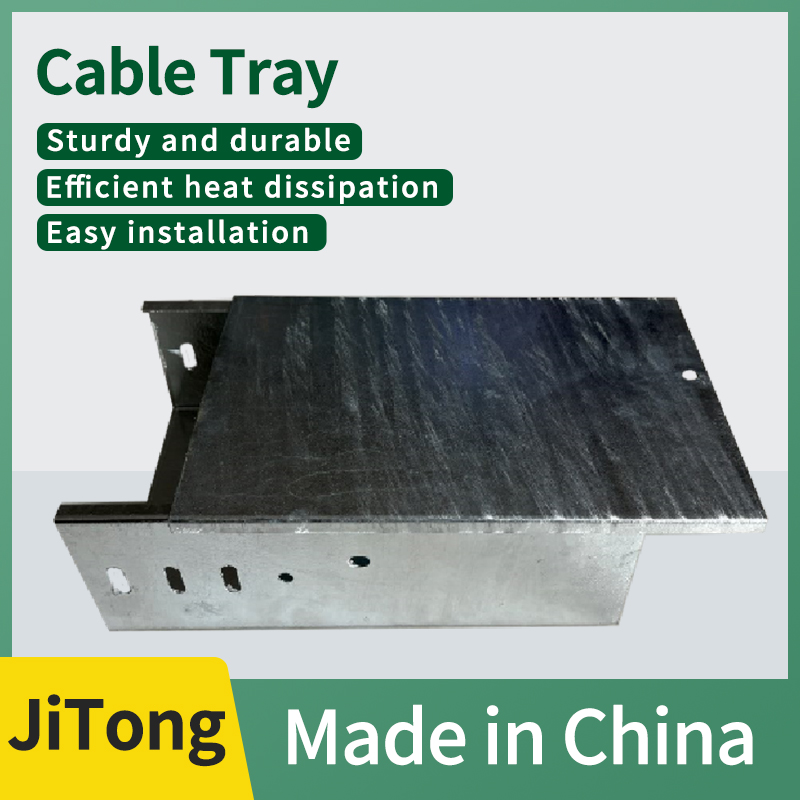
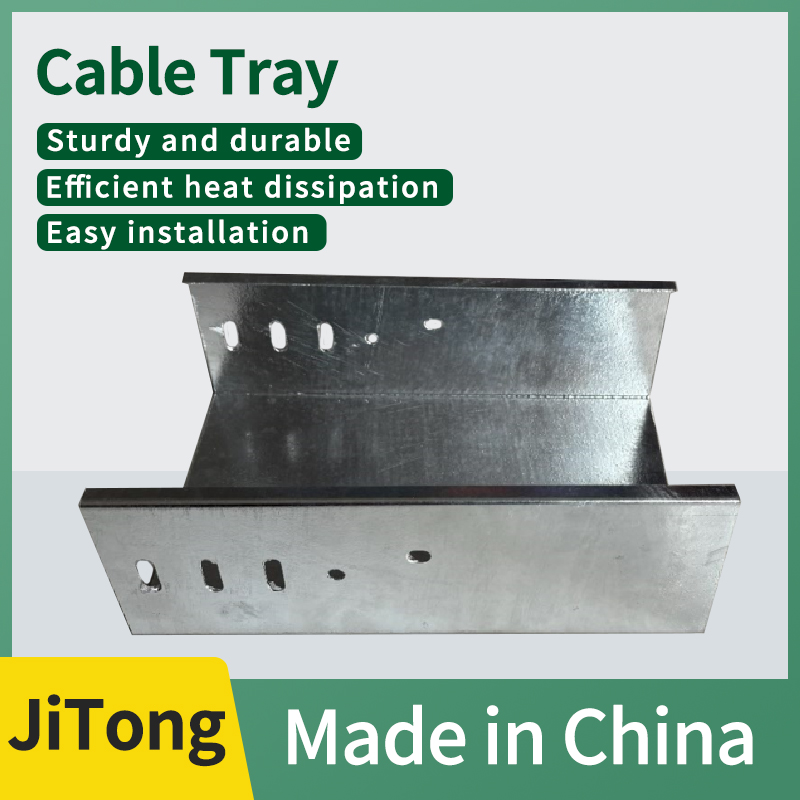
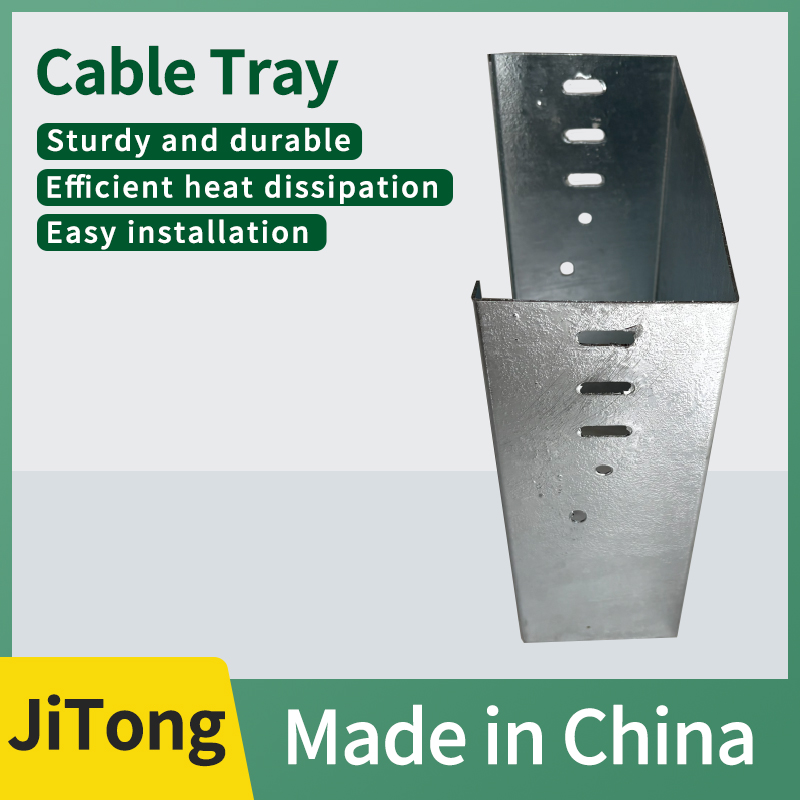
Hot-dip galvanized trough-type cable tray, with base material being Q235 carbon steel plate, integrally bent and formed into a fully enclosed U-shaped trough, and equipped with hot-dip galvanized cover plates of the same process; after the tray, cover plates, and complete set of accessories are processed, they are immersed in molten zinc for hot-dip galvanizing and anti-corrosion treatment, serving as a closed wiring carrier that combines long-term heavy corrosion resistance, electromagnetic shielding, dust and water resistance. It is formed first and then hot-dip galvanized as a whole, fully enclosed without any hollows, and its shielding and protective capabilities are far superior to ladder-type and tray-type trays.
II. Complete Production Process Flow
1. Tank Body Forming Process: Steel plate cutting → CNC integrated bending to form a closed tank body → Prefabrication of side connection holes and lifting holes → Processing of supporting cover plates, elbows, tees, reducers, and other irregular-shaped parts; heavy-duty bottom pressing with longitudinal reinforcement ribs to enhance rigidity.
2. The core process of hot-dip galvanizing for corrosion protection involves degreasing and degreasing → thorough rust removal through hydrochloric acid pickling → plating activation → soaking in molten zinc at 450~480℃ for 3~5min → centrifugal removal of excess zinc liquid → water cooling and passivation inspection. The plating structure is: steel substrate + zinc-iron alloy intermediate layer + pure zinc outer layer, metallurgically fused, with resistance to peeling and falling off due to impact and cutting; national standard for zinc coating: plate thickness ≤5mm, average zinc coating thickness ≥65μm; thick plate >5mm, zinc coating thickness ≥86μm, zinc coating adhesion ≥610g/㎡; corrosion resistance characteristics: equipped with sacrificial anode cathodic protection, preferential corrosion of zinc coating on surface scratches and cuts, automatically protecting the steel substrate; neutral salt spray test can last for over 3000h.
Appearance: Overall silver gray, with natural zinc pattern on the surface, matte texture, without the bright effect of electroplated zinc mirror.
III. Complete Set of Accessories
1. Straight-through accessories: hot-dip galvanized connecting pieces, galvanized bolts and nuts, grounding jumper wires; 2. Turning and irregular-shaped pieces: horizontal 90°/45° bends, vertical up/down bends, tees, crosses, reducers, inside and outside bends; 3. Functional accessories: split-type hot-dip galvanized cover plates, metal divider plates, fixing buckles; 4. Support system: thickened hot-dip galvanized support arms, columns, hangers, seismic braces.
Fourth, five core advantages: 1. Super strong long-lasting heavy-duty corrosion resistance to high salt spray, acid and alkali, moisture, and rain erosion, suitable for harsh environments such as coastal areas, chemical plants, sewage plants, and open-air pipe corridors, with a normal service life of 15 to 25 years; the corrosion resistance is 5 to 10 times that of electro-galvanized trays, and it requires almost no maintenance in the later stage.
2. Fully enclosed structure, with top-level electromagnetic shielding effect. The complete slot body + cover plate sealing isolates external alternating electromagnetic field interference, perfectly protecting DCS instrument lines, optical fibers, communication cables, computer control lines, and security signal lines. It eliminates mutual interference between strong and weak electricity, making it the first choice for central control rooms and precision control systems.
3. The enclosed cavity, which is fully dustproof, waterproof, and resistant to mechanical damage, blocks the intrusion of dust, oil, rainwater, corrosive gases, mice, and insects, delaying the aging and damage of the cable sheath. The protection level after sealing can reach IP40 or above.
4. With strong structural rigidity and excellent load-bearing performance, the integrated bending slot body can be equipped with optional bottom reinforcement ribs, making it resistant to bending and compression, and less prone to deformation. The maximum uniformly distributed load can reach up to 500kg/m, supporting multi-layer and high-density cable laying, and exhibiting excellent seismic performance.
5. It is compatible with full-scene wiring, equipped with standardized prefabricated installation holes for simple splicing and hoisting; metal partitions can be added to achieve separate trough laying for strong and weak electricity, allowing one set of cable tray to accommodate both power and signal cables.
Ⅴ. Applicable Scenarios:
1. Highly Corrosive Outdoor Areas: coastal docks, offshore wind power, coastal industrial areas, wastewater treatment plants, chemical/smelting/pharmaceutical workshops;
2. Precise Weak Current Signal Systems: central control rooms, DCS control rooms, data rooms, communication base stations, fire alarm circuits;
3. Open-air pipe racks, tunnels, underground wet basements, outdoor overhead cables;
4. Factories, energy storage power stations, and rail transit weak current main lines with strict requirements for shielding, dust prevention, and waterproofing;
5. Production workshops with high dust, spraying, and rodent infestation.
VI. Precautions for Construction and Installation Specifications
1. Exposed sections resulting from on-site cutting, drilling, and grinding must be promptly sealed with zinc-rich repair paint to prevent corrosion;
2. All connecting bolts, brackets, and columns must be made of hot-dip galvanized material. The mixed use of ordinary galvanized parts is prohibited to avoid electrochemical corrosion of dissimilar metals;
3. For long-distance continuous laying, grounding jumper wires must be installed between each section of the cable tray to ensure overall equipotential continuity. Repeated grounding is added for chemical and substation projects;
4. When laying strong and weak electrical cables in the same trough, metal dividers must be installed for complete isolation. In open-air and dusty environments, supporting galvanized cover plates must be used throughout the process;
5. For heavy-duty cable trays with a width of over 600mm, additional bracket support points should be provided to control deflection deformation under long-term load;
6. In workshops with high dust and volatile acid-base environments, spray-painted double-layer corrosion protection can be added on top of hot-dip galvanizing to further enhance the level of protection.